My bariatric surgery was years ago — is it too late?
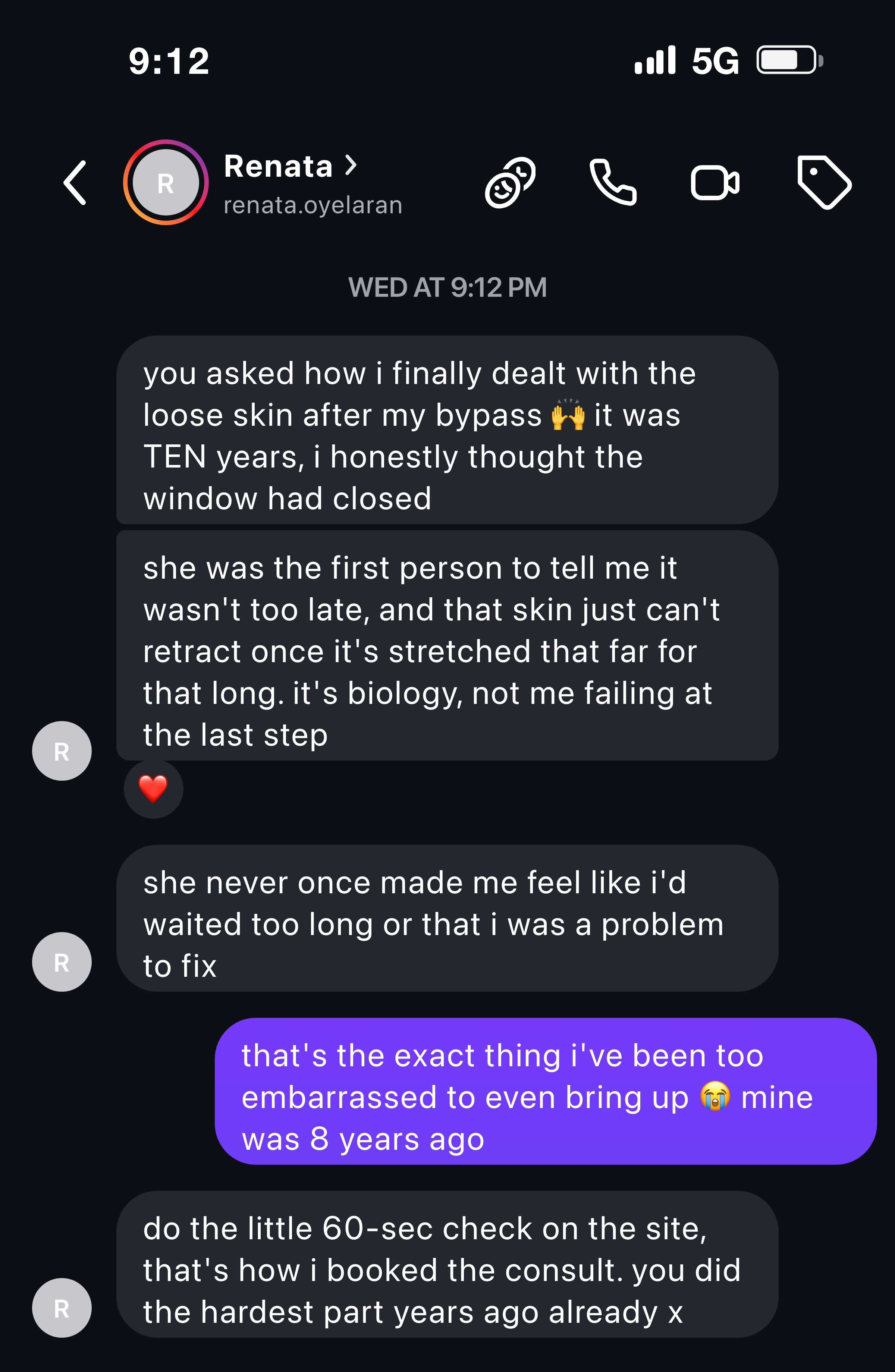
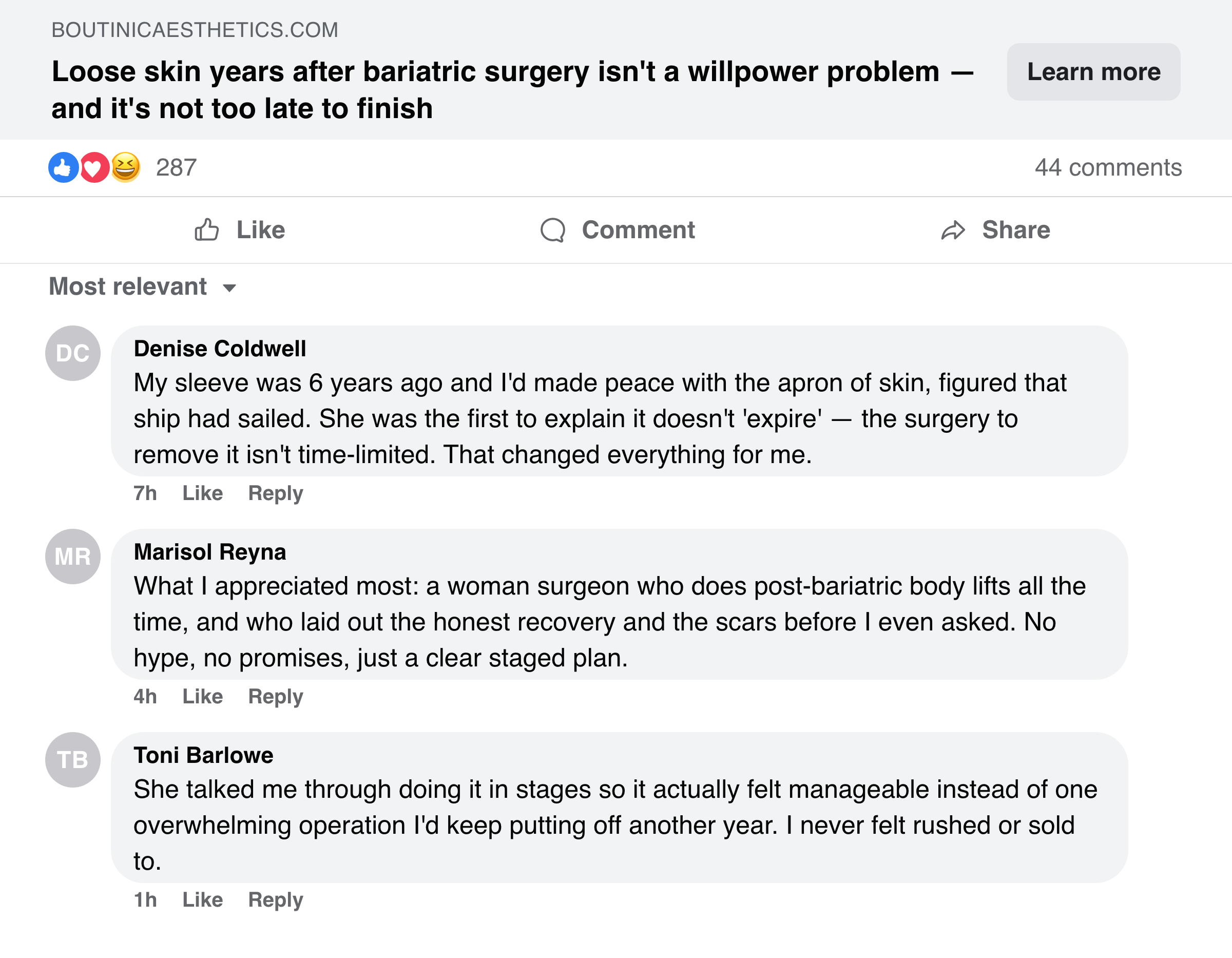
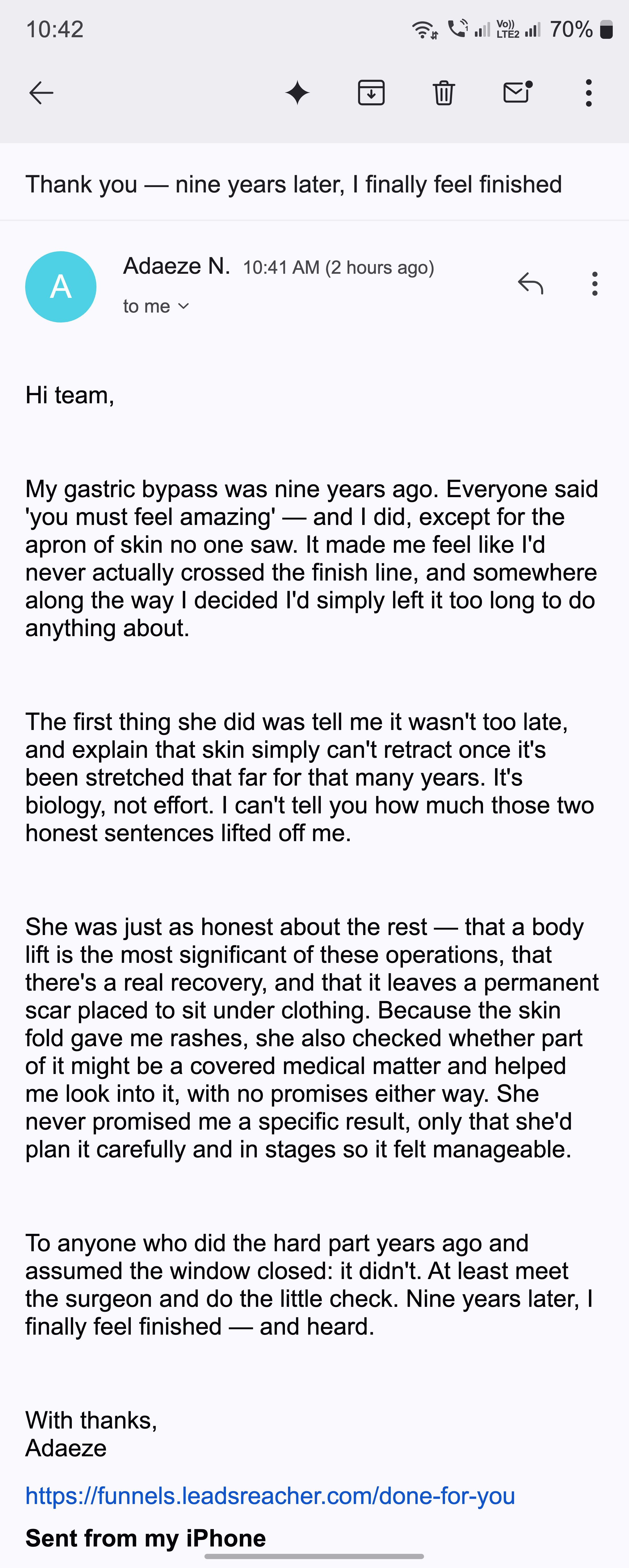
No. This is one of the most common worries we hear, and it’s simply not how it works. Skin that has lost its elasticity doesn’t re-drape on its own whether it’s been two years or twenty — and the surgery to address it isn’t time-limited the way people fear. The one thing that matters clinically is that your weight is settled, which most years-out bariatric patients already are.
Can diet, exercise or creams fix loose skin after bariatric surgery?
Honestly, no — and no one should tell you otherwise. Once skin has been stretched past its elastic limit, it can’t retract on its own, no matter how disciplined you are with diet, exercise, protein or lotions. It’s biology, not effort. Surgically removing the excess skin is the mechanism that actually addresses it.
What’s a body lift, and will there be scars?
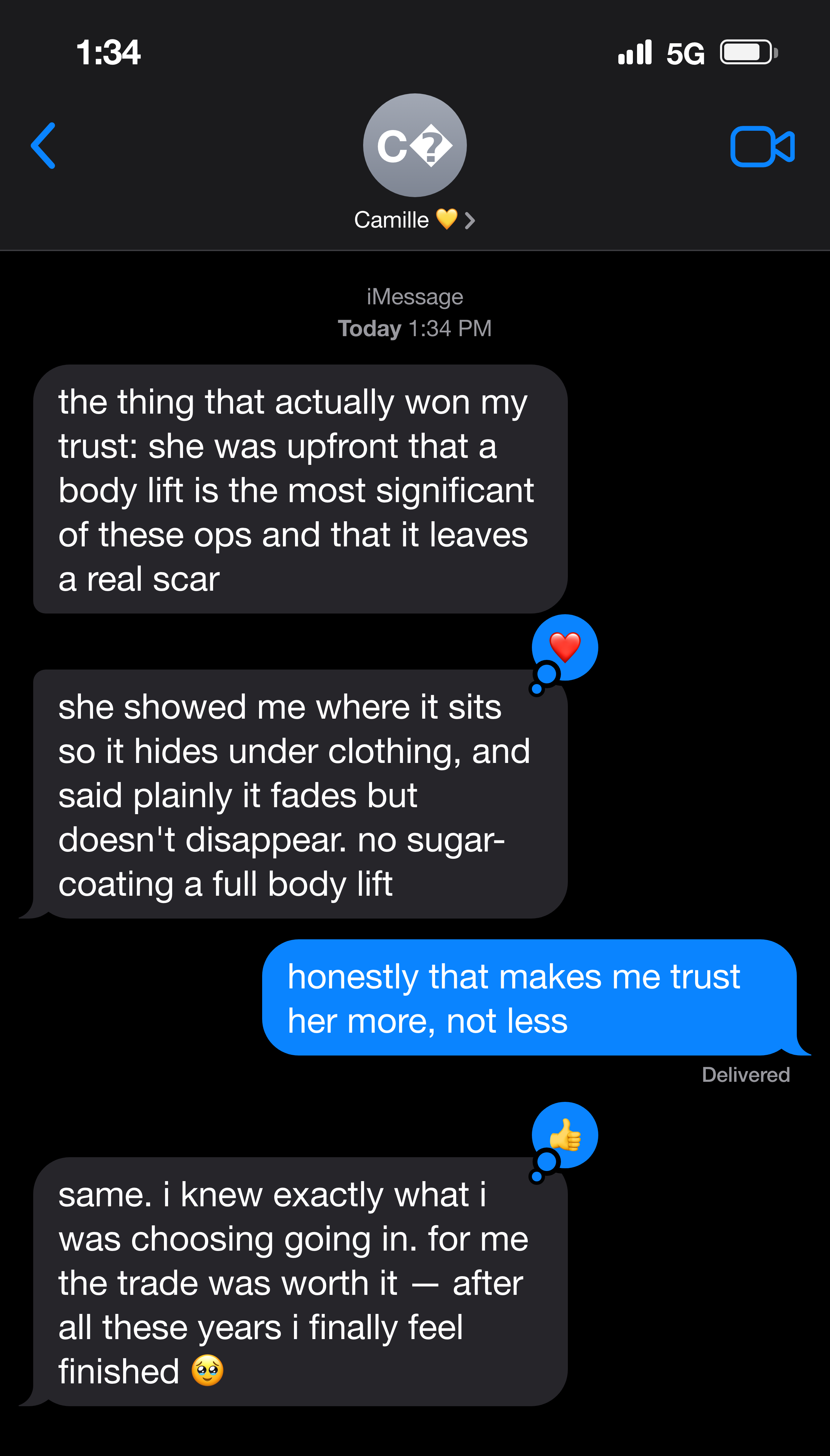
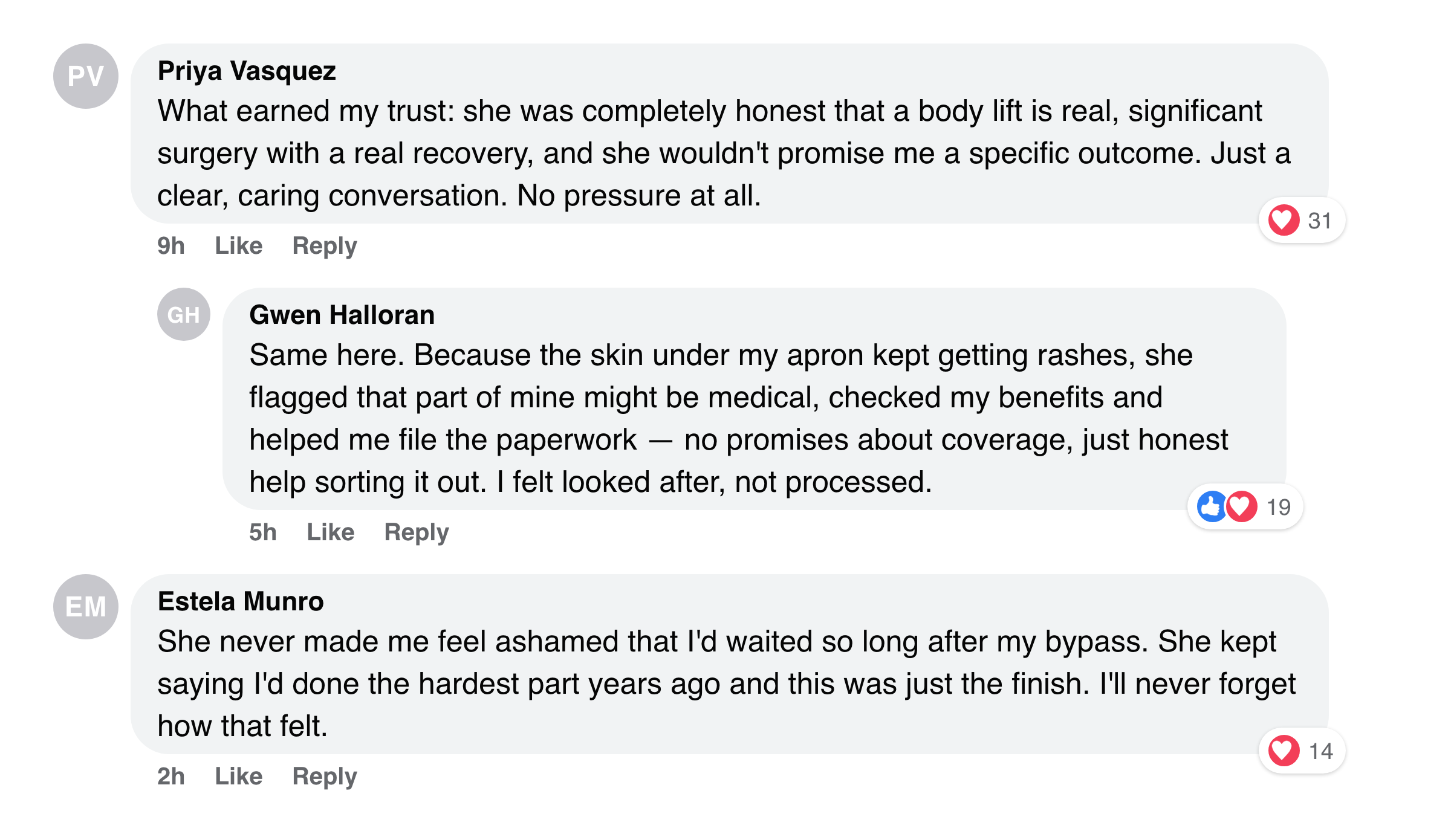
A body lift is the operation that removes loose skin all the way around after major weight loss — it’s the most significant of these procedures. And yes, it leaves a scar: an incision that runs low and around, plus inner-arm or inner-thigh scars if those zones are included. We place incisions so they sit under clothing, and they fade and flatten over many months — but they are permanent. We’re candid about exactly where yours would sit, because the scar is the honest trade for the skin coming off.
How much recovery are we really talking about?
It depends on the zones and how much is done at once. A single arm or thigh is lighter; a full or circumferential body lift is a significant operation with a real, weeks-long recovery. Expect the first one to two weeks to be the most restricted. These are typical ranges, individual to you, and never guaranteed — and we’ll never borrow the “one visit, back to normal” language you see elsewhere.
Can I do everything at once, or is it staged?
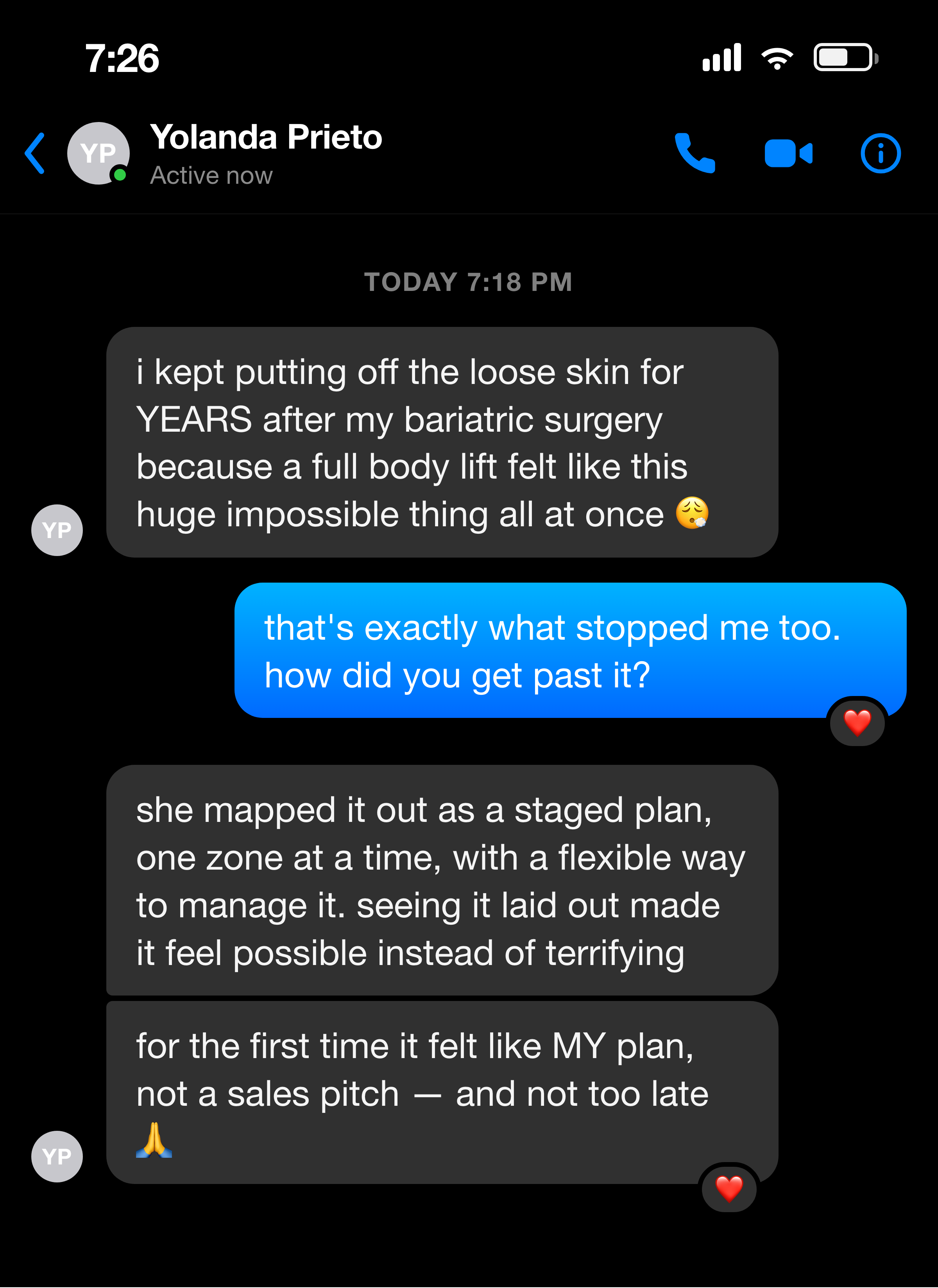
Often it’s staged — sequenced zone by zone over roughly six to twelve months, so each recovery is respected and your life keeps moving. Some cases can combine areas in one operation if it’s genuinely right for you. Your roadmap lays out the order and the honest reasons for it.
Is any of it covered — and can I combine it with the cosmetic part?
Often, yes, this is worth checking. Cosmetic skin removal to reshape your contour is a cash procedure, which is why we make it manageable on one monthly line (from about $245/month, soft-check, no credit impact). Separately, a panniculectomy — removing a hanging apron of skin that causes recurring rashes, infections or functional problems, which is common after bariatric loss — may be covered when it’s medically necessary. When it applies, the medically-necessary removal may be covered and the aesthetic contour can be added as a cash step in the same operation. Coverage always depends on your plan, your documented symptoms and prior authorisation; nothing is ever “approved” or “covered 100%” up front. We help you check.
Does it matter that I lost the weight with bariatric surgery?
Only in that it’s the journey that brought you here, and that a body lift after bariatric loss is a specialized operation we do a lot of. This isn’t about the weight-loss procedure itself — we make no claims about any weight-loss surgery or medication, and we don’t promise weight loss. We simply address the loose skin the weight loss left behind. Because nutrition matters after bariatric surgery, we may ask that a few things (like protein and bloodwork) be in good shape before surgery.
What if I’m still losing weight, or only recently stabilised?
Then the honest recommendation is often to wait a little. The best, longest-lasting results come once your weight has been stable for a while, because further loss (or regain) can change the very result we’d be shaping. If you’re not quite there, we’ll tell you warmly — and be here when you are.
How do I know if I’m even a candidate?
Start with the warm 60-second check above — it reads where you are in your bariatric journey, sketches your zones and sequence, screens whether any part may be covered, and gives a personalized read, in about a minute. It isn’t a diagnosis. A board-certified surgeon confirms candidacy, and designs your roadmap, at your complimentary consult.